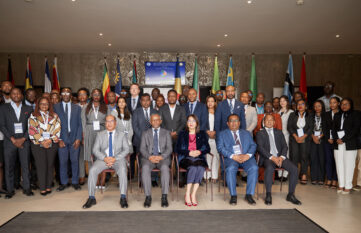
The BMZ DataLab
We are living in a time of profound global shifts: geopolitical instability, technological disruption, demographic change – all of these factors pose challenges for both German development cooperation and public administration in general. Established governmental processes are reaching their limits, and the pressure to innovate is increasing.
To ensure that the German Federal Ministry for Economic Cooperation and Development (BMZ) remains capable of acting in this rapidly changing and complex world, it needs to constantly adapt to new methods and technologies such as Artificial Intelligence (AI) and be able to use them safely and with purpose.
At BMZ Data Lab, we are creating the conditions for this: Our goal is to make the technological developments of our time usable for BMZ and to use them meaningfully – to reduce complexity, drive digital change and use resources more efficiently. This enables the BMZ to become innovative and resilient, not only in its daily internal work, but also in its cooperation with partners, and to effectively support sustainable development worldwide.

You are currently viewing a placeholder content from YouTube. To access the actual content, click the button below. Please note that doing so will share data with third-party providers.
More InformationOur focus
Our Team
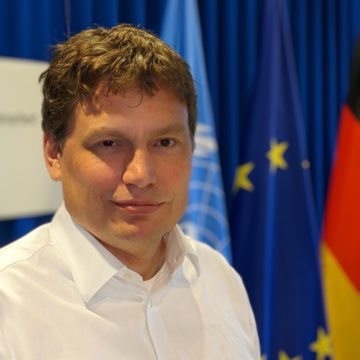
We are an interdisciplinary team of data scientists at the Federal Ministry for Economic Cooperation and Development (BMZ). As an innovation unit, we work in an agile and solution-oriented manner with specialist units from all departments to develop new fields of application for modern data and AI solutions.







Our Projects
Expert chatbots
We are developing KIEZ (Artificial Intelligence for Development Cooperation), a chatbot for all employees in the ministry. Our specialized document chatbots answer questions about the ministry’s projects and the AI regulation.

Webinars
What exactly is GPT? Where does artificial intelligence (AI) come from and how does it differ from traditional information technology? We answer these questions in two training series on data and AI skills. Our webinars provide basic knowledge and practical skills.

Dashboards
We present data clearly in dashboards on various topics within the ministry. For example, we show how much different countries contribute to global financing for climate protection and adaptation over time. Other dashboards show how vulnerable small island states are, or which regions are supported by the ministry.

The Data to Policy Navigator
The Data to Policy Navigator supports leaders and policymakers in understanding the basics of data-driven decision-making. It provides a step-by-step guide and a range of practical examples from around the world on how to integrate data into policy and program development.

NegotiateCOP
NegotiateCOP provides delegations with an AI-powered tool that supports them in preparing for international climate negotiations. The platform helps negotiators quickly find and compare statements and contributions on climate policy and answer specific questions on key negotiation topics.

Cooperation with PARIS21
In cooperation with PARIS21, the BMZ Data Lab has supported several knowledge products aimed at improving the use of data in policymaking. These include three discussion papers on innovative approaches to data use – covering topics such as artificial intelligence, data-based decision-making and statistical capacity building – as well as accompanying webinars in which the findings were discussed with international partners.Discussion Papers (PARIS21)
Discussion Papers
- Enhancing the availability and quality of data for policymaking using AI
- Turning the page on data use: new approaches to data use for policymaking
- The road to statistical capacity: learning from the past, acting for the
Webinars
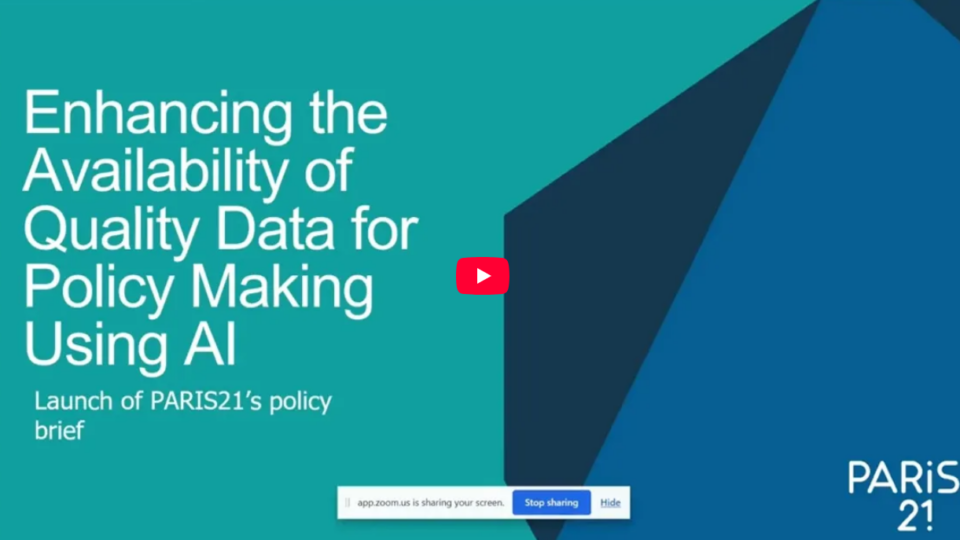
You are currently viewing a placeholder content from YouTube. To access the actual content, click the button below. Please note that doing so will share data with third-party providers.
More Information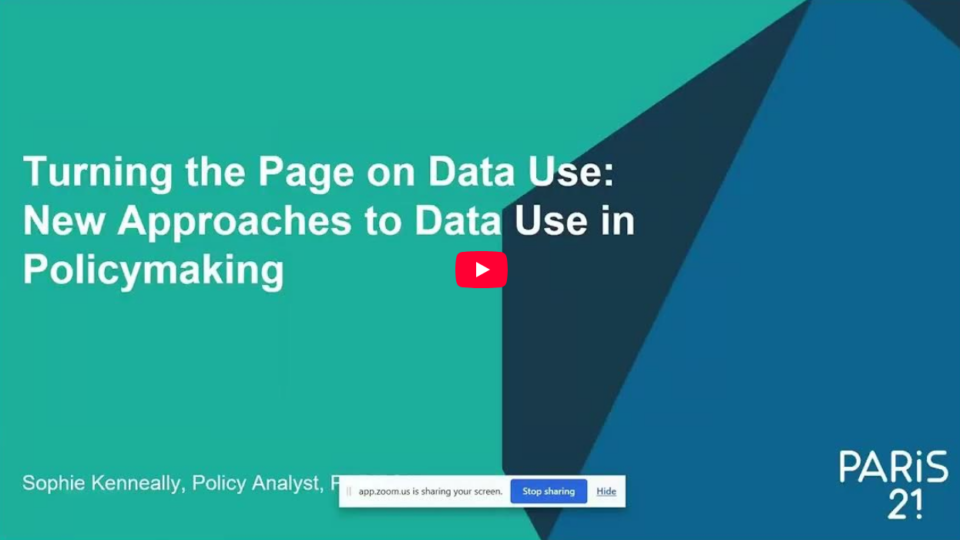
You are currently viewing a placeholder content from YouTube. To access the actual content, click the button below. Please note that doing so will share data with third-party providers.
More Information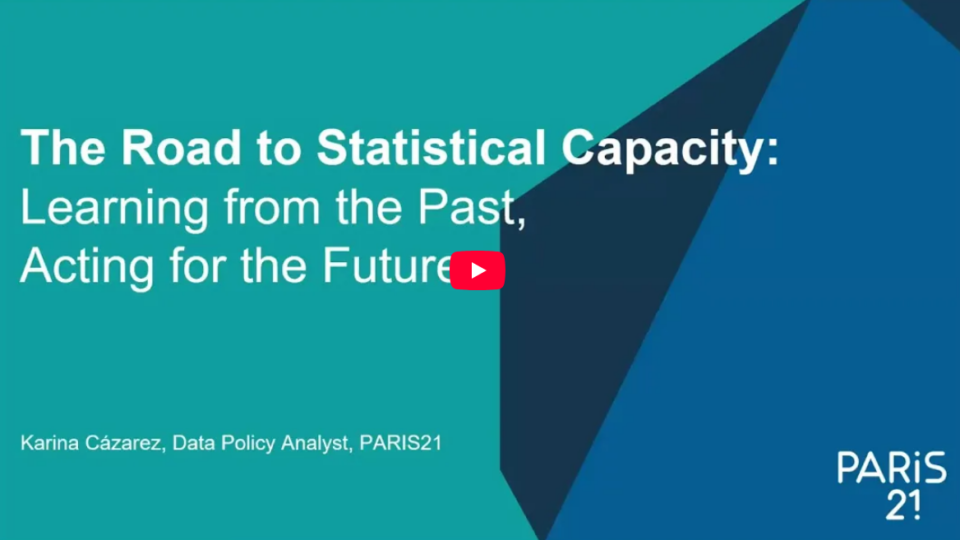
You are currently viewing a placeholder content from YouTube. To access the actual content, click the button below. Please note that doing so will share data with third-party providers.
More Information